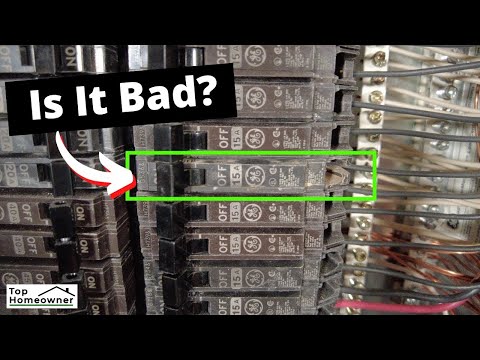
Learn how to spot bad circuit breakers and understand the symptoms.
📢 Subscribe to Top Homeowner Here:
👇 CLICK SHOW MORE 👇
📒 Video Notes 📒
This is NOT a sponsored video. Some product links are affiliate links, including Amazon Affiliate links, which means if you buy something, we may receive a small commission at no additional cost to you.
-=Tools Used or Shown In This Project=-
Multimeter:
VoltClaw:
Non-Contact Voltage Tester:
Connect with Top Homeowner on Social Media:
✍ Visit our blog @
📷 Follow us on Instagram:
👍 Join us on Facebook:
🐦 Tweet us on Twitter:
❓ QUESTION — Have a question about Home Maintenance, Home Repair, Home Related Products, Organization, or Anything Else? Post in the comments section of this video!
📢 Subscribe to Top Homeowner Here:
#tophomeowner #homemaintenance #homerepair
About This Video:
This video provides essential information on understanding your home’s electrical panel, spotting the signs of a bad circuit breaker, and safety measures to observe when dealing with electrical panels. From recognizing the symptoms of a faulty breaker, to when it’s time to call a professional electrician, we cover it all. Remember, safety first when dealing with electricity. Please note that this video is for informational purposes and does not replace professional advice.
⏰ Chapter Timecodes ⏰
0:00
Disclaimer:
Top Homeowner produces videos for informational, educational, & entertainment purposes only. Information here is not to be viewed as advice but as an opinion. Viewers should be aware that if they choose to work on their homes, they do so at their own risk. Top Homeowner is not responsible for any damages that may occur to the property of a viewer. Some of the projects, materials, and techniques may not be suitable for all ages or skill levels. It is up to the viewer to decide whether to consult with a professional before working on their home. We make no claims to the safety of the projects, techniques, or resources featured in this video, and we will not be held responsible for the actions viewers may choose to take with the information provided. It is recommended that viewers use common sense and take all necessary safety measures. Codes, regulations, standards, and rules are constantly changing around the world, so it is the viewer’s responsibility to ascertain their local requirements before starting any type of work.

Thumbs up. Thanks. I have this one specific outlet that reads 120v and on this specific outlet, when I plug the space heater in this particular outlet, it starts to cause a burning rubber/plastic smell. What steps should I take? The smell is coming from the circular breaker board
They lie and say I’m a problem they are a nuisance to me any way they can be one of the 3 breakers with a tester section went out will replace it it’s symbolic or me and my daughter lmbo or my mom and 2 brothers they been in their th box 20 plus years
So i had a big fan with a 1/2 hp motor plugged into a 120 outlet and the fan fell over and the belt stoped the motor and it burnt the motor and then the entire living room oulets and lights dont work and the breaker never triped and ive turned it on and off and still nothing. What do i do? This would be my last strike with electricity with the landlord.
I think by listening to this video and knowing what has went on its my GF outlet in my old trailer house . The current outlet isnt even a GF outlet so I can replace that I do believe .
With the breaker off, I measured ~0.5V across the output. Shouldn’t it be 0V?